Friday, February 13, 2015

Nobody Knows The Troubles I've Seen

The History Of Lynching In America Is Worse Than You Think, Says Study

Posted:

By Rich McKay

ATLANTA, Feb 10 (Reuters) - Lynchings in which mobs raided jailhouses to hang, torture and burn alive black men, sometimes leading to public executions in courthouse squares, occurred more often in the U.S. South than was previously known, according to a report released on Tuesday.

The slightest transgression could spur violence, the Equal Justice Initiative found, as it documented 3,959 victims of lynching in a dozen Southern states.

The group said it found 700 more lynchings of black people in the region than had been previously reported. The research took five years and covered 1877 to 1950, the period from the end of post-Civil War Reconstruction to the years immediately following World War Two.

The report cited a 1940 incident in which Jesse Thornton was lynched in Alabama for not saying "Mister" as he talked to a white police officer.

In 1916, men lynched Jeff Brown for accidentally bumping into a white girl as he ran to catch a train, the report said.

Bryan Stevenson, founder and director of the Montgomery, Alabama-based EJI, said that while current events did not directly equate with lynching, "what happened then has its echoes in today's headlines."

He cited racial differences in reactions to last year's shooting death of an unarmed black teenager in Ferguson, Missouri, by a white police officer.

The group said the report was aimed at spurring Americans to face the lasting impact of their history. It also would like to see historical markers placed across the South to note sites where lynchings occurred.

Calling the violence racial terror designed to subjugate black people through fear, Stevenson and his associates sought to catalog every lynching in 12 states: Alabama, Arkansas, Florida, Georgia, Kentucky, Louisiana, Mississippi, North Carolina, South Carolina, Tennessee, Texas and Virginia.

"The South is littered with monuments for the Civil War," Stevenson said. "But we haven't looked at the great evil of slavery. Its aftermath morphed into terrorism of lynching."

"We as Americans haven't dealt with our full history," he added.

Sociology professor E.M. Beck of the University of Georgia agreed that past lynchings had affected perceptions of justice.

"Many white people look on the police as their protectors, defenders of their rights, and blacks can look at the same officers as part of a system sent to control and contain them," he said. (Editing by Letitia Stein and Peter Cooney)

Also on HuffPost:

Close
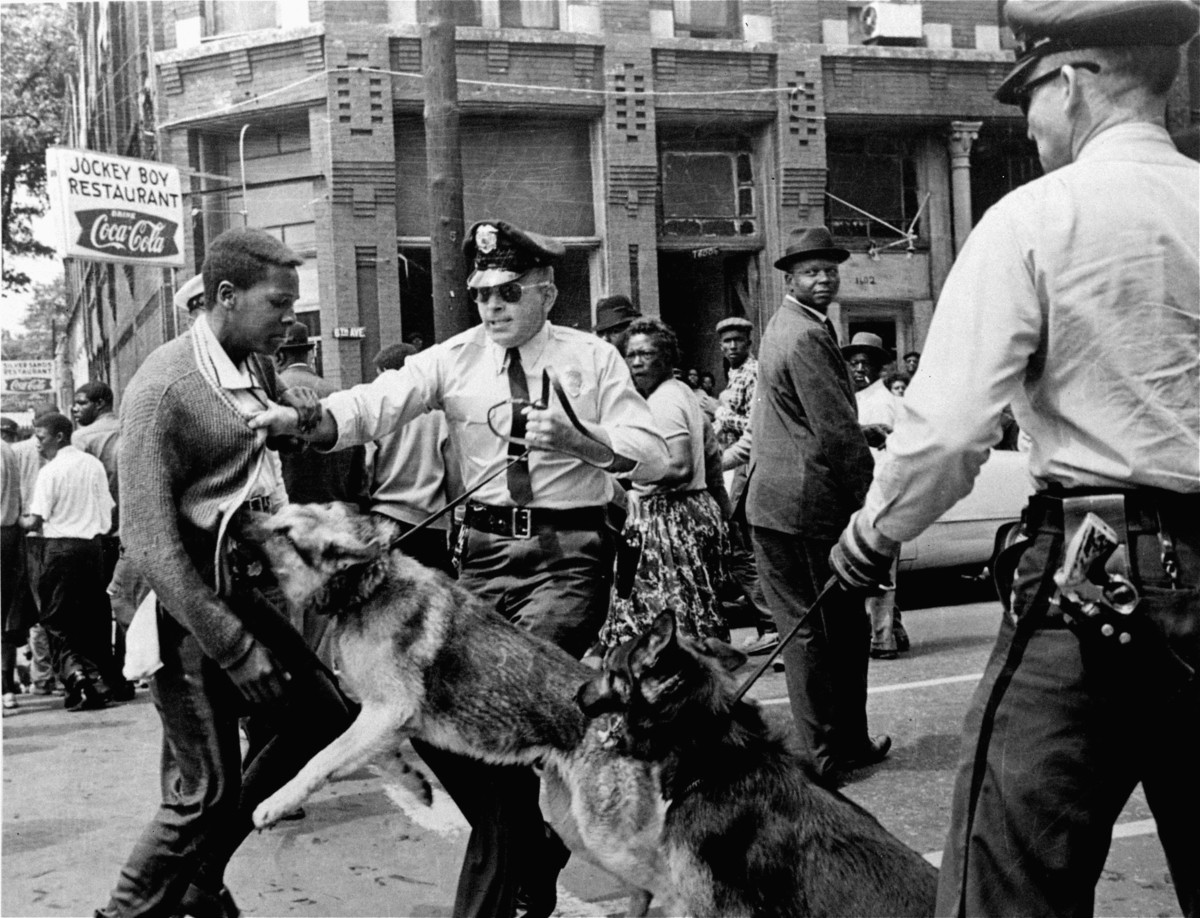
Black History Month Photos
1 of 29
AP Photo/Bill Hudson, File

Labels:

Monday, November 25, 2013

Scottsboro Boys Pardoned Posthomously.

JUSTICE DELAYED is JUSTICE DENIED. But, It's Better Late Than Never!!
Alabama's parole board granted posthumous pardons Thursday, 21 November 2013, in the notorious "Scottsboro Boys" case of the 1930s, which became a potent symbol of racial injustice and led to landmark legal decisions.
The three men pardoned— Charles Weems, Andy Wright and Haywood Patterson —were among nine Black teenagers falsely accused of raping two white women on a train in Alabama in 1931. Within weeks, eight were convicted and sentenced to death by all-white juries in Scottsboro, Ala., amid a racially charged atmosphere. The judge declared a mistrial for 13-year-old Roy Wright.
(Four of the defendants in the `Scottsboro Boys' case are led into a Decatur, Ala., courtroom on April 6, 1933.AP)
What ensued was a yearslong legal battle that included three rounds of trials. The men spent varying amounts of time in prison, but all eventually were paroled, pardoned or freed. The last defendant died in 1989.
The Scottsboro case triggered outrage and protests that some consider a precursor to the civil-rights struggles of the 1950s and 1960s. It reached the U.S. Supreme Court twice, yielding significant rulings on the right to legal counsel and the exclusion of Blacks from juries. It inspired songs, books, poetry and even a Broadway musical in 2010.
"We're real proud that it's over with," said state Rep. John Robinson, a Democrat from Scottsboro. "It was one of the grossest injustices that has ever been done in this country."
Activists and historians have long pressed the state to pardon the defendants and commemorate their case, said Rev. Robert Shanklin, a pastor who serves on the executive committee of the Scottsboro Boys Museum and Cultural Center.
In April, Alabama lawmakers unanimously passed a measure to allow the state's Board of Pardons & Paroles to grant posthumous pardons to the Scottsboro defendants. A petition seeking the pardons was signed by all the circuit judges and district attorneys in the two counties where the defendants were convicted. The board found that five of the defendants were ineligible under the law because their convictions had been overturned and charges against them dropped in 1937. A sixth, Clarence Norris, was pardoned by Gov. George Wallace in 1976. The board unanimously voted to pardon the three remaining defendants.
"Clearly, it's just long, long, long overdue," said James A. Miller, an American studies professor at George Washington University (GWU) and author of a book about the Scottsboro cases. He lamented that the pardons came too late for the defendants, whose lives were ruined. But he said he hoped the board's actions would "generate deeper and widespread interest, not only in the case, but in the historic vagaries of American justice."
Those who pushed for the pardons said they hoped the actions would help the state close a searing chapter in its history. "We are a long way from where we were in the '30s in Alabama," said Glenn Thompson, a circuit judge in Morgan County, Ala., who was among those who petitioned the parole board for the pardons. "It's largely a symbolic gesture at this point, but it's better late than never."
and

Labels:

Sunday, September 01, 2013

War Against Christianity Hits Home


For as far back as anyone can remember, Missouri Baptists have gathered on river banks for Sunday afternoon baptisms.
The preacher leads the new believers into the water, draped in white robes as a choir sings, “Shall We Gather at the River.”
It’s the way it’s been done for generations – baptizing in creeks, lakes, and rivers “in the name of the Father, the Son and the Holy Spirit.” 

But now the long-cherished tradition of “taking the plunge” has been drawn into a controversy with the federal government.
Many Christians believe the Bible commands new followers of Christ to be baptized immediately after their conversion.
The National Park Service (NPS) began enforcing a policy recently that required churches to obtain special use permits in order to baptize in public waters. As part of the same permit process, the NPS also mandated that churches give the Park Service 48 hours advance notice of pending baptisms.
But as any Baptist or Pentecostal in good standing knows – that’s a problem.
“If the Holy Spirit is working on Sunday morning, you’re going to baptize Sunday afternoon,” Dennis Purcell told The Salem News. “You may not know ahead of time.”
Many Christians believe that the Bible commands new followers of Christ to be baptized immediately after their conversion. It’s a public expression and celebration of their new-found faith in Christ.
The National Park Service told local churches the permits were needed to “maintain park natural/cultural resources and quality visitor experiences, specific terms and conditions have been established.”
The feds also closed vehicle access to a sandbar along a popular creek in the Ozark Mountains, meaning churches could no longer drive their elderly members to the outdoor baptisms. And to make sure the Baptists behaved, they placed large boulders in the area to block car traffic.
“Like the Baptists and Pentecostals are going to harm natural resources and adversely affect quality visitor experiences by occasionally baptizing new converts?” asked local resident Lewis Leonard. “I can think of a whole lot more activities along the river ways that are not conducive to maintain the natural resources.”
Rep. Jason Smith fired off a letter to the feds on Aug. 21 demanding answers.
“I am very troubled by any federal rule that requires churches to apply for a permit for the purpose of baptism, especially when these traditional activities have been done in the rivers and streams of this nation since its founding,” the congressman wrote.
He pointed out the National Park Service does not require a 48-hour notification from fisherman or swimmers – so why churches?
“One would hope that the answer is not ‘because the National Park Service wants to limit the number of baptisms performed on the river.”
The Park Service responded within 24 hours. They said the reason they needed two days notice is to “give the park staff adequate time to prepare the permit.”
But based on local outrage – and Rep. Smith’s promise to bring the matter before Congress, the Park Service had a change of heart.
“As of today, the park’s policy has been clarified to state that no permit will be required for baptisms within the Riverways,” Supt. William Black wrote in a letter to the congressman. “I can assure you the National Park Service has no intention of limiting the number of baptisms performed within the park.”
Rep. Smith called the decision a “victory for common sense.”
“The notion that permits would be required for baptisms on our riverways is ridiculous,” he said.
It’s not the first time government officials have tried to discourage public baptisms.
In Olympia, Wash., a church was denied a permit to hold a baptism at Heritage Park a few weeks ago. Their request was rejected because the attorney general said the religious sacrament was a violation of the state constitution. (???)
In 2011, a church’s beach baptism was shut down by lifeguards in Miami.
But while the government cracks down on public expressions of the Christian faith, they are embracing public expressions of the Islamic faith – many times at taxpayer expense.
Universities across the nation are spending thousands of dollars to install foot baths so Muslim students can wash their feet before their five-times-a-day prayers.
The New York Times reported that the University of Michigan-Dearborn spent $25,000 to install the foot-washing stations in restrooms. The university defended the expenditure, claiming it was for health and safety measures, not religion.
A number of airports have spent public tax dollars to provide foot-washing basins for Muslim taxi drivers. One Arizona airport went so far as to provide prayer rugs.
And San Francisco International Airport renovated a building to create a house of worship for Muslim workers. Airport officials declined to reveal how much tax money was spent, but a spokesman told the San Francisco Chronicle they just wanted to maintain “a good relationship with ground transportation providers.”
So there you have it, good readers. Our government increasingly affords accommodation to the Muslim faith, while attempting to regulate the Christian faith.
It reminds me of something John Adams once wrote: “Nothing is more dreaded than the national government meddling with religion.”
(Todd Starnes)

Labels:

Wednesday, August 07, 2013

DHS/USCG Future Home Is A Mental Institution

Homeland Security’s Future Home: A Former Mental Hospital

As we celebrate the Coast Guard's Birthday on August 4, 2013, we reflect upon the progress the United States Coast Guard has made since its inception in 1790. Originally the Coast Guard was the nucleus of the Treasury Department. Later it was moved to the Transportation Department, and finally to the Department of Homeland Security.

Some are beginning to wonder if the move to the DHS was such a good idea.

The Department of Homeland Security (DHS) has became a case study in mismanagement. DHS’s top ranks swelled with appointees with questionable credentials, such as, the Civil Rights Officer. A more famous political appointee was Michael Brown, who totally mismanaged the Government's efforts following Hurricane Katrina. The former FEMA director had been previously employed for a decade by the International Arabian Horse Association. There were frequent interagency tussles. For instance, two separate agencies—the Customs and Border Protection (CBP) and Immigration and Customs Enforcement (ICE)—were supposed to safeguard the nation’s peripheries together. It didn’t go well. “It’s vital to recognize that the two bureaus barely interact,” David Venturella, former director of ICE’s office of detention and removal operations, told a congressional committee in 2005. “When they do, they argue over budget, operations, and jurisdiction.” DHS’s goof-ups were spectacular and sometimes comical. In 2005, Congress chastised its Directorate of Information Analysis and Infrastructure Protection for including mini-golf courses, petting zoos, and a bourbon festival alongside nuclear power plants on its list of places in danger of terrorist attacks. DHS also had a habit of entering into no-bid contracts with politically connected companies.

shock
Chris Mills frequently gives tours of St. Elizabeths Hospital, a former mental institution where the U.S. Department of Homeland Security (DHS) is building a $4.5 billion headquarters. It’s the largest construction project in the District of Columbia since the Pentagon was completed in 1943. So there’s a lot of ground to cover. Mills prefers to chauffeur his guests around the place in a golf cart.
A cheerful 55-year-old with a neatly trimmed mustache, Mills, who is managing the project for DHS, tells visitors to look out for animals. There are loads. Herds of deer, a flock of wild turkeys, and a bald eagle reside in the fenced-in facility. They might not last long outside. St. Elizabeths is located in Anacostia, one of D.C.’s toughest neighborhoods. But they have little to fear inside the high-security fences. “It’s like the wild kingdom in here,” Mills says with a chuckle.
Then he’s off in his golf cart with his passengers. His boss, Jeffery Orner, DHS’s chief readiness support officer, who oversees all of the department’s real estate, has come along for the ride. There’s a DHS public-relations person on board, too. She sits in the back, smiling and saying nothing. Everybody is wearing hard hats and DHS safety vests.
As Mills meanders through the leafy campus on a splendid June morning, he explains that the headquarters is mission-critical. He says DHS is currently scattered in 50 locations throughout the capital. After its dismal performance in Hurricane Katrina in 2005 under FEMA's Michael Brown, the agency decided it would be better able to fight terrorists and respond to natural disasters if its leaders worked side by side in one place. “We really needed a consolidated headquarters,” Mills says.

St. Elizabeths’ Center Building, c. 1900(Courtesy National ArchivesSt. Elizabeths’ Center Building, c. 1900)
He explains that DHS will use many of the old hospital buildings on the 176-acre campus. He pulls up to the dining hall where inmates once took their meals. It has been painstakingly restored and will serve as a festive 300-seat cafeteria for Homeland Security employees. The kitchen has been completely refurbished and the dining room is now lit with hanging pastel-colored globes. “As you can see, this is ready to go,” says Mills proudly.
From there it’s a quick trip to the future seat of the secretary of the Department of Homeland Security. Until recently, that would have been Janet Napolitano, but she announced her retirement on July 12. Whoever runs DHS will occupy the former office of the St. Elizabeths asylum superintendent. They were surrounded by the inmates.
It isn’t ready, not by a long shot. There aren’t lights, for one thing. Mills passes out flashlights and leads the way inside. There are holes in the floors. The ceilings are collapsing in some areas. Mills says St. Elizabeths moved patients out of the building in the 1960s, but somebody forgot to turn off the heat. “The steam was left on for years and years and years and years,” Mills laments. “The building literally rotted from the inside. The floors collapsed on each other.”
“This renovation of this building would make a great HGTV episode,” Orner says, “except they tend to complete their work in one show.”
It’s a clever line, one that Orner has undoubtedly uncorked previously. But he raises an important issue. The project is moving slowly, even by the geologic standards of the U.S. government. It’s been plagued by delays and mounting costs. People might not even remember Napolitano when the building is completed, which might be around 2026.


In the months after the Sept. 11, 2001attack on the World Trade Center, the Bush administration and the U.S. Congress decided that Americans would be safer from terrorists if they combined 22 federal agencies into a single unit—including the Coast Guard, the Customs Service, the Secret Service, the Immigration and Naturalization Service (INS), the Transportation Security Administration, the Federal Emergency Management Agency (FEMA), the National Infrastructure Protection Center, the Federal Computer Incident Response Center, and the Animal and Plant Health Inspection Service, to name just a few. It was the largest reorganization of the federal government since the creation in 1947 of what would become the U.S. Department of Defense.
The new Department of Homeland Security would have 180,000 employees and a $36 billion budget, but its supporters promised it would be nimble. There were a few dissenters in Congress. One was Representative John Mica, a Florida Republican. “I gave a little speech at the time,” he remembers. “I said anyone who thinks you can combine 22 agencies and 200,000 people and it’s going to be more efficient and economical needs to have their head examined.
He turned out to be prophetic. DHS became a study in mismanagement. The department’s top ranks swelled with appointees with questionable credentials, such as, the Civil Rights Officer, and Carmen Walker. The most famous was Michael Brown, the former FEMA director who had been previously employed for a decade by the International Arabian Horse Association. There were frequent interagency tussles. For instance, two separate agencies—the Customs and Border Protection (CBP) and Immigration and Customs Enforcement (ICE)—were supposed to safeguard the nation’s peripheries together. It didn’t go well. “It’s vital to recognize that the two bureaus barely interact,” David Venturella, former director of ICE’s office of detention and removal operations, told a congressional committee in 2005. “When they do, they argue over budget, operations, and jurisdiction.” DHS’s goof-ups were spectacular and sometimes comical. In 2005, Congress chastised its Directorate of Information Analysis and Infrastructure Protection for including mini-golf courses, petting zoos, and a bourbon festival alongside nuclear power plants on its list of places in danger of terrorist attacks. DHS also had a habit of entering into no-bid contracts with politically connected companies.
(Devin Leonard, Bloomberg Businessweek)

Webster Smith Took A Hit from CG Office of Civil Rights.
It took a long time for the Dept Homeland Security, Office of Civil Rights to make a decision on the Webster Smith Discrimination Complaint. Today, Webster Smith is on the ropes after receiving a sucker punch from Ms Carmen Walker, the Deputy Officer for EEO Programs in the Department of Homeland Security. The big question is will he be able to survive a "standing 8 count", or will this be the final round in his fight to get justice from the Coast Guard Academy and the Coast Guard?

Carmen H. Walker, DHS, Deputy Officer for EEO Programs, Office of Civil Rights and Liberties, in her 20 August 2007 letter says that because Webster Smith was court-martialed, he could not have been discriminated against, as a matter of law. Well, that is just flat out patently wrong. A court-martial does not bar a civil rights action. The court-martial was just one act in a chain of events, each of which constituted racial discrimination. The same set of facts can give rise to actionable relief in two different arenas, as here. The several discriminatory actions taken against Webster Smith before he was even charged under the UCMJ are completely separate and distinct from any possible legal errors that were committed during the course of the court-martial.
Only the legal and procedural errors committed by the prosecution at trial are the subject of the appeal to the Coast Guard Court of Military Revue. This decision by Ms Walker is the dumbest decision I have ever seen, and the shortest. There was more meat on the shadow of the chicken that died of starvation than in this Report. There are no Findings of Fact. There are no Conclusions. There is no Rationale, or any reasoning whatsoever. There is nothing in the Final Report to show how she arrived at her decision. No comparisons are made with any other cases or sets of facts. This was a pure anal extraction.

H. Jerry Jones, the Coast Guard’s director of the Office of Civil Rights in Washington D.C., authorized an inquiry Dec. 7 of last year into whether former cadet first class Webster Smith, who is Black, was treated differently during the investigation into his case than whites who had committed similar offenses.
After reviewing Smith's complaint, Jones dismissed 16 separate claims but authorized an investigation into the alleged inequity of treatment, headquarters spokesman Cmdr. Jeff Carter said Dec. 15.
The Coast Guard hired JDG Associates Inc., a San Antonio-based consultant company that specializes in equal opportunity and civil rights issues, to examine the complaint, Carter said.
Carter explained that the Coast Guard does not maintain a large Equal Employment Opportunity Commission staff and needed to hire the firm to ensure fairness.

Consistent with 29CFR 1614.107(b) when an agency dismisses some but not all of the claims in a complaint, the dismissed claims will not be investigated and the dismissal is not immediately appealable. The Department of Homeland Security was supposed to review them together with the Report of Investigation when it prepared the Final Agency Decision (FAD) on the accepted claims. It does not appear that Ms Walker has done this. She does not appear to have followed the letter or the spirit of the regulation.

Webster Smith has the right to request reconsideration of the FAD, including the dismissal determination if it is sustained. It appears that Ms. Walker has done that by default. Even though the dismissed claims were not processed as discreet and separate claims, the information regarding the dismissed claims were required to be used as evidence during the investigation of the accepted claim. Ms. Walker certainly could not have done that. However, it is hard to tell just what Ms Walker did, if anything. She gives very few clues as to what she did, if she did anything. She could have flipped a coin, or rolled the dice for all we know. The FAD is brief and uninformative. It gives very little insight into the inner workings and hidden mechanisms of her mind.
Ms Carmen Walker was faced with a living room full of pink elephants. She chose to ignore all of them. She ignored what would have been obvious to even a child, and instead she grasped at two invisible straws. She chose to hang her hat on a technicality that will prove to be a gross embarassment to her and her Agency. She had a chance to be on the right side of History. She followed the path that leads into the woods, and she chose the most frequently traveled path. That might prove to make all the difference in the world.

It looks like Ms Walker has not looked at this complaint since it first arrived on her desk. She must have noticed that the First Anniversary of the filing of the complaint was fast approaching. On 5 September, it will be one whole year since the complaint was filed. Ms Walker was required by Agency Regulation to provide Webster Smith with a copy of the investigative file, to notify him in writing that he has a right to request a hearing and a decision from an administrative judge or may request an immediate final decision from the agency (29 CFR 1614.110). This Final Decision looks like nothing more than it really is, and that is, a half-hearted attempt to avoid letting the 360 day period run out without taking the required agency action.

Oscar Wilde said that the easiest way to get rid of a temptation is to yield to it. Ms Walker obviously believes the easiest way to get rid of a complaint is to simply say that it does not state a claim for which relief can be granted.

In her decision no evidence was evaluated. Statements were taken by the Investigating Officer, but no Facts were deduced. There were two apparently implied facts: One, that Webster Smith had been in the military; and, Two, that he had been court-martialed. From those two apparently implied facts, Ms Walker concludes that Webster Smith's Discrimination Complaint fails to state a claim for which relief can be granted.

Is this woman a lawyer? Where did she go to law school? She said that Webster Smith cannot challenge the results of a court-martial through the employment discrimination complaint process. Well, Ms. Walker, we were well aware of that fact one year ago. If Webster Smith were trying to overturn his court martial conviction by filing a civil rights complaint, then he would not have filed an appeal to the Coast Guard Court of Military Review. That is a separate action. It is designed to remedy the errors committed during and after the court-martial conviction for disobeying an order and extorting sexual favors from Shelly Raudenbush.


The Court of Military Review has no jurisdiction to render a finding concerning whether Webster Smith was discriminated against when he was forcefully removed from Chase Hall at midnight in December 2005 by Coast Guard Intelligence, or when he was prevented from attending class, or when he was made to work on the boat docks in June 2006, or when he was forbidden to speak to any other classmates or cadets, or when he was forbidden to go within 100 yards of Chase Hall. Moreover, it was discrimination when a press release was distributed to the media with his photograph calling him a sexual predator and saying that his presence created an intimidating environment in Chase Hall. All of these prohibited actions occurred long before a charge sheet was drawn up, and well before a court-martial was convened and most certainly before a verdict was rendered. On these acts alone Webster Smith was discriminated against because of his race. These all occurred long before the court-martial and the other related acts occurred.


The Court of Military Review is a military forum and can only give a military remedy. It has no jurisdiction to give relief in the administrative, employment area. That is why there is a civil rights complaint procedure. It is designed to address those areas where one has been treated differently than others based on his race, or sex.

A comparison may be drawn between a civil court and a criminal court. O J Simpson was found not guilty in a Los Angeles criminal court of the murders of Nicole Brown Simpson and Ron Goldman. That did not prevent a civil court in Santa Monica using the exact same facts from finding him liable to the Goldman family for the wrongful death of Ron Goldman. By the same token, if O J Simpson had been found guilty in criminal court that would not have been a bar to trying him in civil court for damages.

The fact that Webster Smith was court-martialed and appealed the court-martial proceedings, in no way can lead to the unnatural conclusion that he is trying to overturn his criminal conviction by using a civil rights complaint. If he succeeds in his criminal appeal and is able to reverse the conviction, that still does not mean that he was not treated differently than Matt Bialuk, and John K. Miller, and about 12 other cadets whose cases were handled differently. Even if Webster Smith had not been court-martialed, he would still have a valid claim of discrimination. Just being removed from the cadet barracks at midnight in hand cups, and forced to work at hard labor on the boat docks, and not being allowed to continue going to class would constitute a case of disparate treatment.

Is it any wonder that Department of Homeland Security waited so long before responding to Hurricane Katrina? With this caliber of decision making, we should be surprised that they showed up at all. We are left scratching our heads at the range of inefficiency and ineffectivness that characterized the Department Homeland Security and FEMA’s behavior right before and after Katrina. The failure of initiative cost lives, prolonged suffering, and left all Americans justifiably concerned our government is not prepared to protect its people. It does not appear to be any more capable, or willing to defend our civil rights either. I sleep a little less securely just knowing who is in charge.

There is something else quite unusual about this Decision. It was sent Certified Mail Return Receipt Request and it was date stamped 20 August 2007. It had to be signed for, so we know exactly when it arrived. It did not arrive at the Smith residence until 4 September. That is more than two weeks. If we can send a man to the moon in a week, why did it take Ms Walker’s decision more than 2 weeks to go from Washington DC to Houston, Texas? This is yet another example of the sterling performance of the men and women on the front lines of Homeland Security. How can the American people sleep soundly at night with this caliber people on watch? If I were on a ship, I would sleep wearing my life preserver. We have some difficult days ahead.

It took this long to spin a lie that someone would believe. All history is spin. Some spin you can believe, some you cannot.
For example, we have been taught that Abe Lincoln freed the slaves; but the truth is before the outbreak of the Civil War, Lincoln believed in freeing slaves only on condition that they be immediately exported to Africa (Liberia). He once boasted: “I am not nor ever have been in favor of making voters or jurors of negroes, not of qualifying them to hold office, nor to intermarry with white people.

Also, we have been taught that Thomas Jefferson believed that all men are created equal ( except for Blacks, Native Americans, and men without property); but the truth is Jefferson was kept busy spinning how the author of the Declaration of Independence could also own slaves, let alone force one of them to sleep with him and bear him children.

Finally we have just been told that Webster Smith, Matt Bialuk, and John K. Miller were all treated the same; but the truth is that they were not. They were all cadets; they were all suspected of having committed sexually related offenses. But, only Webster Smith was taken out of Chase Hall, forced to work at hard labor at the boat docks, prevented from continuing with his academic classes, and prevented from coming within 100 yards of Chase Hall. They were most certainly treated very differently.

And, oh, by the way, on top of all that, Webster Smith was also court-martialed. He could have very easily been court-martialed without being discriminated against, but he was not. But, if it makes you feel any better, you can drop that one allegation from the civil rights complaint. He has already been found not guilty of rape, and he has already served his 6 months in the brig. And, his appellate lawyers have appealed the conviction to the appropriate forum. So, now all you have to do is deal with the discrimination complaint. Anyone who cannot see that has been promoted up to their level of incompetence. They are not capable of critical thinking. How many people have been irreparably harmed by this person's bad decisions and incompetent advice?

There is an old Sicilian Proverb that says “if you sit by the river long enough, you will see the bodies of your enemies float by”. How long will Webster Smith have to sit by the river before he sees the bodies of Van Sice, Wisniewski, Kristen Nicholson, Shelly Raudenbush, et al float by?

THIS JUST IN:
The Day was a day late and a dollar short. In an article written by Jennifer Grogan on 9/11/2007, The Day reported that “The U.S. Department of Homeland Security has ruled that Webster Smith was not discriminated against on the basis of his race when he was court-martialed for sexual assault last summer.” That is not true, nor is it correct.

She reported that “The Smiths declined to comment.” That is true; however, when they saw what she had written, they had plenty of comments. Mainly, they commented that Ms Grogan’s article was not correct. And they were right. The Day was forced to print a correction on 9/12/2207. As one might expect, the CORRECTION was not as conspicuous, nor as easy to locate as the first blatantly erroneous article. The damage had been done. As Webster Smith’s mother, Belinda, said”After the article has gone nationwide with the Associated Press, they quietly corrected the article but the damage is done.”
The Day, unlike the Navy Times, printed an article short on facts, but long on quotes from the people who had slandered Webster Smith, and who are trying to save face. The same people who tried to label Webster Smith as a sexual predator and released his private cadet photograph to the news media to be beamed around the world. At the Coast Guard Academy,” Chief Warrant Officer David M. French, an Academy spokesman, on Monday, 10 September, was quoted as saying “We feel the Department of Homeland Security's final decision on the civil rights complaint from Webster Smith validates the academy's actions in this matter as appropriate.”

The CORRECTION buried in the B Section of The Day simply said “The U.S. Department of Homeland Security denied a discrimination claim filed by Webster Smith, a black man expelled from the U.S. Coast Guard Academy following his court-martial for sexual assault. The department ruled that the complaint was not filed in the appropriate forum.”


To deny a complaint and then to give 30 days for one to appeal the denial, is a long ways from saying there was no discrimination. There has not yet been a decision on the ultimate issue of whether Webster Smith was a victum of racial discrimination.

Personally, I like The Day. I used to read it when it was named The New London Day. It and the New York Times were the only newspapers that I read for four years. They have a lot more coverage of the Coast Guard Academy now than then. I wonder why.

Beverly Herbert wrote on 3/31/2008: "I attended the Easter service at Connecticut College and was glad that I did. I was pleasantly surprised at the positive message by the former-Gov. John G. Rowland in which he spoke of his journey from the high to the low and how faith brought him through.
I know many people think of John Rowland as the worst governor ever. However, during his administration I remember writing to him and actually getting an answer and getting the issue addressed. Also, I remember when calling the governor's office that his staff was always courteous, gracious, knowledgeable and helpful.
Many people seem to want to make the former governor the poster boy for political corruption in Connecticut.
Making him the poster boy can no more solve the problem of political corruption in Connecticut than making Webster Smith the poster boy for all the sexual misconduct and abuse that had gone on at the Coast Guard Academy for years without anyone being held accountable."

(Feb 24, 2009)Independent Audit Finds USCG Office of Civil Rights Incompetent.
Carmen Walker issued the dumbest and the shortest decision in the history of the Civil Rights Office.
Employees in the Coast Guard’s Office of Civil Rights (OCR) do not have the skills or up-to-date training to handle many of the service’s cases and formal discrimination complaints are not adequately handled, according to an independent report presented to the Coast Guard on February 5.

Terri Dickerson, the office’s director, requested an independent review April 25, 2008, less than one month after an investigation by the Coast Guard Investigative Service, Naval Criminal Investigative Service and the FBI failed to determine who left nooses for a Black Coast Guard Academy cadet and an officer conducting race-relations training in the summer of 2007.

At the same time, an unofficial Coast Guard blog was posting regularly about the office and the director’s alleged inefficiencies, reducing morale among employees and casting OCR in a negative light, according to the report.

The findings are “deeply disturbing and completely unacceptable,” Cummings, D-Md., wrote in a letter to Commandant ADM Thad Allen. Cummings, the chairman of the House subcommittee on the Coast Guard and Maritime Transportation, said he plans to call a hearing in April to further discuss the report.

“The findings of this report demand decisive and comprehensive action to correct what appear to be a number of significant shortfalls in the administration,” he wrote.

The Coast Guard retained Booz Allen Hamilton, a consulting firm with offices throughout the country, to review the entire civil rights program in September 2008, according to a letter from Dickerson to the Department of Homeland Security’s Equal Employment Opportunity Programs.

Coast Guard spokesman Cmdr. Ron LaBrec said the service is thankful for the feedback and is conducting a thorough review of the report and its recommendations.

“The [DHS] Office of Civil Rights and Liberties periodically conducts assessments on its civil rights components and the [OCR] director wanted to do this report now with the ongoing modernization initiative to look across the board and improve the practices in the office and address any allegations that were coming out of blogs or even internal discussions. We take allegations of mistreating [privacy issues] seriously,” LaBrec said.

According to the report, the Coast Guardsmen assigned to ORC often come in with little civil rights experience and serve two-year tours, and “often they leave their post just as they are becoming oriented to the position.” The other Coast Guardsmen in the office are on collateral duty, with the same limited backgrounds, according to the report.

Although training is available, the report said, many employees have not completed the legislatively mandated initial or refresher training. In some instances training was behind up to five years.

“Some staff members lack the requisite skills, abilities, and training to effectively perform the duties of their positions, thereby diminishing effectiveness of the divisions/teams,” according to the report.

LaBrec said the “decentralized” structure led to the delinquency in training and the Coast Guard is looking to “standardize” and “improve” its training program. There are 22 full-time positions within OCR, five of which are military, but that likely is not enough to sufficiently handle the additional responsibilities related to the increased caseload, according to the report.

Although Booz Allen acknowledges that some of the recommendations listed in the report cannot be accomplished with the office’s $788,459 budget, OCR’s Web site says the recommendations are under review and lists some that have either already been completed or can be accomplished in the near future.

Those include:

• Restructuring the office to “optimize the use of our military personnel” and take advantage of existing training and resources.

• Analyze the workload to ensure statutory and non-statutory obligations are being met.

LaBrec said it is too early to determine what recommendations would require additional funding or how much additional money would be needed to accomplish those goals.

“The review reaffirmed many positive aspects of the Coast Guard civil rights program. The report also makes clear there is work ahead,” Dickerson wrote in Thursday’s Alcoast. “Foremost, consistent with past similar studies, the BAH team found we must restructure the [equal employment opportunity] function, and secondarily, shore up our equal employment opportunity/equal opportunity product lines so that they more optimally support our civil rights service providers and work force.”

LaBrec also said the 58 formal civil rights complains OCR received in fiscal year 2007, roughly one per 1,000 people, shows the office is doing some things right, since several of the other DHS departments have a much higher number of civil rights complaints per capita.

Allen told Coast Guard Academy cadets and faculty in October 2007 that racial bigotry will not be accepted and goes against the service’s ethos and humanitarian mission. In August 2008, he released a service-wide message outlining plans to improve diversity throughout the service.

As part of the new initiative, every flag officer and senior executive service member is required to attend one diversity conference a year and they are expected to build relationships with minority-based “institutions of higher education.”

The first noose, which garnered national attention, was left in the bag of a Black cadet in July 2007 onboard the Coast Guard cutter Eagle. The second was found in August on the office floor of a white female officer who had been conducting race relations training.

Statement of
The Honorable Elijah E. Cummings, Chairman
Subcommittee on the Coast Guard and Maritime Transportation
Hearing on
“Civil Rights Services and Diversity Initiatives in the Coast Guard”
April 1, 2009
We convene today to consider the state of the Coast Guard’s provision of civil rights services to its military and civilian workforce and to applicants for employment. We will also examine the initiatives being undertaken by the service to support expanded diversity among both its military and civilian personnel. As part of that examination, we will assess what the service has done to benchmark its diversity-related initiatives following a hearing we held on this subject last year.
In April 2008, the Director of the Coast Guard’s Office of Civil Rights asked the Department of Homeland Security to commission and supervise an independent assessment of the Office and of civil rights programs within the Coast Guard. The proximate motivation for this request was the posting of derogatory blog entries on the web. However, as the Subcommittee has come to learn, there have long existed challenges far more central to the provision of effective civil rights services within the Coast Guard than those discussed in recent blog comments.
In February 2009, Booz|Allen|Hamilton, the firm ultimately commissioned to undertake the study of the Coast Guard Office of Civil Rights, issued its report to the Coast Guard, which subsequently released it to the public. I note that the Subcommittee invited Booz|Allen|Hamilton to testify today and also invited its representatives to meet privately with staff; they declined both offers citing their duty of confidentiality to their client and, rather perplexingly, their internal policy against lobbying. Despite Booz|Allen|Hamilton’s total unresponsiveness to the Subcommittee’s inquiries about a report it prepared on a federal agency and for which it received compensation from U.S. taxpayer funding, the firm’s report speaks for itself.
Among other findings, the Booz|Allen|Hamilton team’s review identified at the Coast Guard a civil rights program that does not fully protect confidential personal information, that does not conduct thorough analyses of barriers to equal opportunity in employment or develop specific plans to break these barriers down, and that has a number of inadequately trained service providers who cannot ensure implementation of a complaints management process that is in full compliance with regulatory requirements.
While these findings are obviously deeply troubling on their own, as the Subcommittee has learned in its extensive review of the Coast Guard’s civil rights programs, they are certainly not new. Previous reviews of the Coast Guard’s civil rights programs, and even the self-assessments the Coast Guard submits annually to the Equal Employment Opportunity Commission, repeatedly identify many of the same problems noted in the Booz|Allen|Hamilton report.
For example, a 2001 review conducted by KPMG found that:

complaints were not handled in an efficient manner;

individuals who provided civil rights services as a collateral duty showed “great variation in … quality;”

affirmative action-related reports were disseminated “but report interpretation and action is left up to the individual unit commands, who may or may not have the required time and knowledge to legally apply the affirmative action program as a factor in hiring and promoting;” and

equal opportunity reviews were being conducted, but there were “no measures or metrics . . . by which to evaluate local command’s program performance.”
A review conducted by PriceWaterhouseCoopers more than a decade ago concluded that the Coast Guard’s “current civil rights program is relatively ineffective at preventing civil rights complaints and the current program office at headquarters is inefficient in discharging their responsibilities.”
In May 2008, the Equal Employment Opportunity Commission sent a feedback letter to the Coast Guard identifying the trends it observed in the Coast Guard’s annual
self-reports from fiscal years 2004 through 2006. Again, the comments sound very familiar. EEOC stated that in its 2004 report, the Coast Guard admitted that “EEO officials did not have the knowledge, skills, and abilities to carry out the full duties and responsibilities of their positions.” In fiscal years 2005 and 2006, the service “reported that there was insufficient staff to conduct adequate analysis of civilian workforce data,” and in 2004, 2005, and 2006, the service noted it “has not implemented an adequate data collection and analysis system and had not tracked recruitment efforts.” The EEOC found that the Coast Guard’s recruitment practices for positions in the civilian workforce created “unintended barriers” to diversity.
Having read all this, what was perhaps most disappointing to me was not just the devastating nature of these individual findings, but the fact that the problems they describe have apparently persisted for nearly a decade. Put simply, the picture that emerges from the reports available to us shows that despite knowing that its equal opportunity programs did not ensure full compliance with U.S. law and regulations, the Coast Guard has taken little to no action to ensure full compliance. Further, there have apparently been no consequences for these failures – except perhaps the individual consequences that Coast Guard personnel may have borne, some of whom may have been denied the opportunity to effectively challenge what they may have felt was discriminatory treatment.
Discrimination is an evil that destroys the dignity of fellow human beings and robs them of the opportunity to achieve what their abilities would otherwise enable them to achieve. In this, the 21st Century, any agency that tolerates any failure in the implementation of effective equal employment opportunity processes or in the effective management of complaints is an agency that is willing to tolerate the possibility that discrimination may exist in its midst.
While I applaud the decision of the Director of the Office of Civil Rights to ask for an independent assessment of Coast Guard civil rights practices, it is also obvious that further study is not needed. Back in 2001, the KPMG team that assessed the Coast Guard’s civil rights program reported that the wide gaps between how the service’s equal employment opportunity program was described in manuals and how the program was actually
implemented “created a perception that the program is not necessarily a priority among senior leadership.” It is LONG PAST TIME that these gaps be closed.
Importantly, as the Booz|Allen|Hamilton report makes clear, successful implementation of the reforms needed to correct the gaps that their team found “will need to be openly endorsed at the highest level of the Coast Guard organization to ensure the cooperation of, and participation by, key stakeholders.” I know that the Coast Guard is undertaking a variety of initiatives to expand diversity, and I commend the written testimony of Admiral Breckenridge, which details these efforts. I also commend the individual efforts of Coast Guard personnel to support the service’s diversity goals. I note that Admiral Allen himself recently visited Morgan State University in my district and gave a very inspiring address to students at that Historically Black University.
What I didn’t find in Admiral Breckenridge’s testimony, however, was a statement that the MD-715 process will now be used as intended to identify all barriers to equal access and to inform the development of the plans that will eliminate these barriers, or that a similar process will be implemented on the military slide. While I appreciate discussion of an “upward glide slope,” progress cannot be measured until specific goals are in place – and to think that goals would need to be defined as “specific representational objectives” is simply to think too narrowly.
I also commend Director Dickerson’s testimony, and her decision to request the Booz|Allen|Hamilton review. I emphasize that I understand – as the Booz|Allen|Hamilton report indicates and the evidence clearly shows – that many of the problems with the Coast Guard’s civil rights program have long pre-dated her appointment.
That said, it is now our watch and the failures and deficiencies that exist with the Coast Guard’s civil rights programs CANNOT CONTINUE. For the Coast Guard to truly be “Semper Paratus” – always ready – it must take all necessary steps to ensure that it is not handicapped by discrimination in its ranks or the divisions that discrimination produces.
As I said when I addressed the Coast Guard Academy following the discovery of nooses there, “Diversity – and our mutual respect for each other – are our greatest strengths as a nation.” They must necessarily be the greatest strengths of those who defend this nation, but they can be so only when an agency makes the achievement of diversity and the provision of effective civil rights services a top priority, rather than what appears to be a second thought.

Labels:

Sunday, July 14, 2013

Another Black Man Dies In America Because He Is Black.

George Zimmerman verdict: Former neighborhood watch leader not guilty in death of Fla. teen Trayvon Martin. In America, being Black can be hazardous to your health. Just being Black often makes one a suspicious character in his own neighborhood to anyone raised on stereotypes about African Americans.
Following nearly three weeks of testimony, a jury of six women, one of whom was Black, in the George Zimmerman trial has found the former neighborhood watch volunteer not guilty of second-degree murder. He was also found not guilty of the lesser offense of manslaughter, which the jury also weighed. (CBS) SANFORD, Fla. July 13, 2013 10:06 PM

Harvard Law professor Alan Dershowitz says the prosecutors in the George Zimmerman murder trial should be charged with "prosecutorial misconduct" for suggesting the defendant planned the fatal shooting of Trayvon Martin.

"That is something no prosecutor should be allowed to get away with … to make up a story from whole cloth," Dershowitz told "The Steve Malzberg Show" on Newsmax TV.

"These prosecutors should be disbarred. They have acted absolutely irresponsibly in an utterly un-American fashion."

Dershowitz is calling for a federal investigation into civil rights violations stemming from the George Zimmerman case — but he says the probe should focus on prosecutorial misconduct rather than on allegations of racial profiling and bias.

Speaking Sunday in an exclusive Newsmax interview, Dershowitz said the jury’s finding that Zimmerman was not guilty of either second-degree murder or manslaughter was “the right verdict.”

He added, “There was reasonable doubt all over the place.”
(State Attorney Angela Corey and her assistant state attorneys Richard Mantei (L), John Guy (2nd L), and Bernie de la Rionda (R))

 Special prosecutor Angela Corey said continues to defend her decision to charge Zimmerman with second-degree murder. "We charge what we believe we can prove,” she told the media. “That’s why we charged second-degree murder. We truly believe that the mindset of George Zimmerman and the words that he used and the reason he was out doing what he was doing fit the bill for second-degree murder.”

Corey said the case “has never been about race,” but also said there was “no doubt” young Trayvon Martin had been “profiled to be a criminal.”

Although Zimmerman was cleared of all charges, Corey told the media: “This case was about boundaries and George Zimmerman exceeded those boundaries.

Zimmerman, a 29-year-old neighborhood watch volunteer, is charged with gunning down Martin, 17, as the two fought following a confrontation in the gated Sanford, Fla., community where Zimmerman lives — an act the defendant said was in self-defense.

In the prosecution's final argument on Friday, lawyer John Guy said Zimmerman deliberately followed Martin and "shot him because he wanted to."

Dershowitz called Guy's statement "such speculation. How does he get into the mind of Zimmerman? He hasn't cross-examined him, he hasn't met him.

"To ask the jury to believe that is to ask the jury to convict based on complete and utter speculation and that's not the way the law operates."

A day earlier, prosecutor Bernie de la Rionda said Zimmerman — whom he labeled a "wannabe cop" — "followed" and "tracked" Martin after profiling him as a criminal.

Dershowitz said not only should Zimmerman have not been charged with second-degree murder, but prosecutors should not have pushed to have manslaughter and child abuse added to the list of possible jury verdicts.

"[It's] utterly irresponsible. … The idea that the prosecution can try the case on a murder theory and then, at the last minute, substitute manslaughter, even though it seems to be permitted generally under Florida law — it's a big mistake to allow it in a case like this,” he said.

"And then the very idea of even suggesting child abuse in a case like this is so irresponsible."

Dershowitz praised the closing argument of defense lawyer Mark O'Mara.

"He did the right thing by being methodical and factual because this is a case where the prosecution's case is all emotion and the defense case is all factual," the famed civil-rights lawyer said.

"Emotionally, obviously everybody can identify with a young, unarmed 17-year-old who ends up dead, and emotionally, as President [Barack] Obama said, he's all of our children."

Dershowitz — whose clients have included Claus von Bulow, Mike Tyson, Patricia Hearst, and former televangelist Jim Bakker — said the case has "reasonable doubt" written all over it.

"Nobody knows who started the initial physical encounter, who threw the first blow — and if you don't know that you have to have a reasonable doubt," he said.

"Nobody knows for sure who screamed, 'Help me, help me.' You have to have a reasonable doubt about that. Nobody knows for sure who was on top and who was on bottom, though the overwhelming forensic evidence suggests that Zimmerman was on the bottom having his head banged by a younger, stronger man. You have to have reasonable doubt there."

 Dershowitz added that he expects there will probably be a wrongful death lawsuit filed against Zimmerman for civil damages. He said civil-damage cases require a lower standard of proof that a wrong has been committed, and Zimmerman would not be able to avoid testifying.
Dershowitz was careful to add that the tragic killing of Trayvon Martin exposes a need to reform Florida laws.


He believes the Stand Your Ground law should be changed because it "elevates macho over the need to preserve life." 

He also stated that racial profiling “has to be addressed.”

“I think these vigilante community groups have to be disarmed,” he said. “I don’t think Zimmerman should have been allowed to have a gun.

“He should have been walking around with a walkie-talkie and calling the police,” he said. “It’s the job of the police to investigate and apprehend suspects based on their professional training.”

Now let us hear the conclusion of the matter. The bottom line is that Trayvon Martin was killed because he was Black. He was followed because he looked suspicious; he looked suspicious because he was Black; he was profiled because he was Black and looked suspicious; He was confronted because he was presumed to be harboring a criminal intent; He was shot by a man with a concealed weapon who wanted to prove to himself that he was not afraid of young Black men; he was killed because he was young, Black, and defenseless. In America being Black can be hazardous to your health.
This from the President of the Southern Poverty Law Center on the verdict yesterday:

Dear Gail,

"They always get away." These were the words George Zimmerman uttered as he followed and later shot Trayvon Martin -- words that reflected his belief that
Trayvon was one of "them," the kind of person about to get away with something. How ironic these words sound now in light of the jury verdict acquitting Zimmerman.

Trayvon is dead, and Zimmerman is free. Who was the one who got away?

Can we respect the jury verdict and still conclude that Zimmerman got away with killing Trayvon? I think so, even if we buy Zimmerman's story that Trayvon attacked him at some point. After all, who was responsible for initiating the tragic chain of events? Who was following whom? Who was carrying a gun? Who ignored the police urging that he stay in his car? Who thought that the other was one of "them," someone about to get a away with something?

The jury has spoken, and we can respect its conclusion that the state did not prove its case beyond a reasonable doubt. But we cannot fail to speak out about the tragedy that occurred in Sanford, Florida, on the night of February 26, 2012.

Was race at the heart of it? Ask yourself this question: If Zimmerman had seen a white youth walking in the rain that evening, would he have seen him as one of "them," someone about to get away with something?

We'll never really know, of course. But we can seriously doubt it without assuming that Zimmerman is a racist in the conventional sense of the word.

Racial bias reverberates in our society like the primordial Big Bang. Jesse Jackson made the point in a dramatic way when he acknowledged that he feels a sense of relief when the footsteps he hears behind him in the dead of night turn out to belong to white feet. Social scientists who study our hidden biases make the same point in a more sober way with statistics that demonstrate that we are more likely to associate black people with negative words and imagery than we are white people. It's an association that devalues the humanity of black people, particularly black youth like Trayvon Martin.

George Zimmerman probably saw race the night of February 26, 2012, just like so many of us probably would have. Had he not, Trayvon probably would be alive today.

The jury has spoken. Now, we must speak out against the racial bias that still infects our society and distorts our perception of the world. And we must do something about it.

Sincerely,

Richard Cohen
President, Southern Poverty Law Center

Labels:

Thursday, October 25, 2012

Bury My heart at Wounded Knee

Bury My Heart At Wounded Knee

by London Steverson on Thursday, October 25, 2012 at 6:23pm ·

Even A Hawk Is An Eagle Among Crows.

No single individual likely will ever fill Russell Means' shoes, but his legacy likely will be multiplied many times over by the Native Americans he inspired, his brother said at the Native American activist's funeral service in Kyle.
Means died Monday 22 October of throat cancer at the age of 72. More than 300 people attended the funeral service on the Pine Ridge Indian Reservation.
"He will be replaced by thousands," said Bill Means, Russell Means' only surviving brother. "One person is not going to replace him, but through his work, through his family, he will be replaced 1,000 times over."
Those attending the service said Means made them feel proud to be a Native American by encouraging them to take pride in their heritage and challenging them to live it.
Means himself never shied away from confrontation. As a young American Indian Movement leader, he spearheaded the 71-day occupation of Wounded Knee, which grabbed the attention of the entire nation.
But Means was never meant to be a warrior, said Chief Leonard Crow Dog, a Lakota medicine man who participated in the Wounded Knee occupation in 1973. Means, he said, was first and foremost a spiritual leader, but the times called for a warrior, and like Crazy Horse, that is what he transformed into.
"He will enter the happy hunting grounds," Crow Dog said before a procession that consisted of horseback riders who met several miles outside Kyle for a solemn journey to Little Wound High School, where an honoring was held into the night.
Means' cremated remains were brought Wednesday from his ranch in Porcupine to the spot several miles outside of Kyle, where friends and family carried him the rest of the way on horseback on a dreary and cold day.
One horse had no rider, a horse Means never had a chance to ride. On Wednesday, it was said to carry his spirit.
"I never did ride with him," Scott Sinquah Means, Russell Means' second son, said before the ride. "Today is my first time I'll be riding with him."
Before the ride, Scott fondly recalled how his father always encouraged him when he lost a boxing match, saying that he lost on a split decision. Only later did he realize that likely wasn't true and his father was just building his confidence.
Along the way to Kyle, the riders made four stops, each time saying a prayer.
The horseback procession carried Means' ashes to the Little Wound High School gymnasium. The riders chanted traditional songs as they approached the school and emerged from the fog. A drum beat and cries were heard as the group neared the school.
A long trail of cars followed the riders — friends and family members — to pay their respects to a man many on the reservation admired.
At the school, the riders gathered in a half-circle, facing an audience of admirers before a Lakota prayer was said. Tatanka Means carried his father's ashes into the school and brought them before the crowd that had gathered.
For hours afterward, family, friends and admirers shared stories of Russell Means with each other, taking turns at the microphone. Some stories were told in the Lakota language, others in English.
Well-wishers from across the country attended, with tribal members and others coming from as far away as Florida, Oklahoma, California, Colorado and Minnesota.
Leaders from the Yankton Sioux Tribe and Oglala Sioux Tribe made appearances, including OST President John Yellow Bird Steele. Numerous other dignitaries paid their respects, including Rapid City Mayor Sam Kooiker and a representative of Sen. John Thune's office.
"He gave pride to something that was systematically crushed," said Ward Churchill, an activist, writer and former co-director of the Colorado chapter of AIM. "To be Indian was to not be human. He turned that around in a real fundamental way."
Churchill, a former professor at the University of Colorado Boulder, said Means could speak with elderly Indians as easily as lifelong academics.
"He took the language back from them," he said.
Arthur Zimiga, a lifelong friend of Means, said Means redefined what it meant to be Indian and helped Native Americans understand who they were apart from how the United States government defined them.
"He was looking for equality. He said, 'I am a man, and I have a right to be a man and be free,'" Zimiga said.

Labels:

Sunday, September 02, 2012

No Jobs For Old People

Richard Eggers is a 68 years old resident of Des Moines, Iowa. He was fired in July 2012 from his job as a customer service representative at Wells Fargo Home Mortgage because of an incident that occurred in 1963, over 50 years ago, according to the Des Moines Register. He put a cardboard cutout of a dime in a washing machine. He admits it was a stupid stunt, but he cannot believe that he was fired because of it 50 years later. Big banks have been firing older low-level employees like Eggers since new federal banking employment guidelines were enacted in May 2011 and new mortgage employment guidelines took hold in February, it was reported in the Des Moines Register.

The tougher standards are meant to clear out older executives and mid-level bank employees and anyone guilty of transactional crimes — such as identity theft and money laundering — but are being applied across the board against older employees.

Wells Fargo confirmed Eggers’ termination. “The expectations that have been placed on us and all financial institutions have never been higher,” said Wells Fargo spokeswoman Angela Kaipust.

Banks have fired thousands of workers nationally, said Natasha Buchanan, an attorney in Santa Ana, Calif., who has helped some of the workers regain their eligibility to be employed.

There is no government or industry data on the number of older bank workers fired due to criminal background checks.

The Federal Deposit Insurance Corp. provides a waiver process employees can follow to show they’re still fit to work at a bank despite a past criminal conviction, but it usually takes six months to a year to be approved. There is also a process for automatic waiver that works more quickly but is limited to people who were sentenced to less than year of jail time and never spent a day locked up. Eggers was jailed two days. Sadly, he doesn’t qualify. So he joins the ranks of the older unemployed who may never find another job.

America is fast becoming a land where there are no jobs for old people. Government employees from the Senior Executive Service to the lowliest General Service employee, along with Fortune 500 middle management executives, and super lawyers from multi-national law firms are being shown the door. America has more lawyers per capita than any other country in the world. Americans love to sue each other.

 In the most litigation-happy country in the world, lawyers are being fired. Today’s recession is not like the recession of the 1930′s. Typically when the economy goes down, lawsuit filings go up, according to a former super lawyer who was let go from a prominent law firm. The only kind of legal filings that have gone up in this economy are bankruptcy cases. When the housing bubble bursted, the number of people filing for bankruptcy went through the roof. Lawsuit filings in general have gone down.

President Richard Nixon had his Enemies List. President George Bush had his Wanted List. President Barack Obama has his Kill List; and Linda de Soto has her “Hit List“. Lisa De Soto is the Deputy Commissioner for SSA/ODAR, the Social Security Administration’s Office of Disability and Adjudication Review. Deputy Commissioner Linda de Soto and Chief Administrative Law Judge Frank Cristaudo fabricated bogus charges against Administrative Law Judges (ALJs) and forced many into early retirement.

According to a well placed source high in the Social Security Administration’s Office of the Chief Administrative Law Judge, Lisa de Soto has stated that she has a list of 25 ALJs that she intends to get rid of. This is her “Hit List”. She has set about her goal in a most vigorous manner.

A federal agency is required to follow its own regulations. This mean very little to Lisa de Soto and Frank Cristaudo. They have violated many SSA regulations concerning the discipline and removal of agency personnel.

 Cristaudo and de Soto have brought charges against judges. Chief Judge Cristaudo has testified at Federal Labor Relations Administrative hearings designed to censure or remove judges. None of the charges against any of the judges have alleged poor performance as a judge, or dereliction of duty. No substantive charges have been brought against any judges. Instead, judges have been charged with, among other things, receiving personal mail at the office, misuse of a government computer, and saving pictures on their computers of persons other than immediate family members.

Frank Cristaudo has made a career of destroying other peoples’ careers. He tried running for public office in New Jersey and could not get elected. Some how he managed to get appointed an administrative law judge at the Social Security Administration. He could not conduct a proper hearing so someone appointed him as the Chief Judge. Who better to appoint chief judge than someone who cannot conduct a hearing? It is better to put such a person in an administrative position. That way he does not have to go near a court room. But in a rat race, the biggest rat always manages to winnow his way to the top.

Linda de Soto’s career had not bottomed out before joining SSA. She was the Social Security Administration’s General Counsel. She is an experienced attorney who has held a number of senior management positions in the private and federal sector. She specialized in procurement, bilateral and multilateral negotiations, conflict resolution and organizational change. Most recently, she was the Country Director for the U.S. Agency for International Development’s (AID) Office of Transition Initiatives in Nigeria. Before that, she served as the General Counsel of the U.S. Trade and Development Agency and as Deputy Assistant General Counsel for Contract and Commodity Management for the U.S. Agency for International Development (AID) in Washington, D.C.

Not all judges are paid to judge. One-fifth of SSA’s judges do not hold hearings. That is one out of five judges who do not judge. Twenty percent of the judges on the SSA’s payroll do not conduct hearings. Some judges are allowed to carry a reduced work load. An an example, judges who are union representatives are not counted as full judges. They are counted as one fourth of a judge. If the average full-time judge is required to publish 60 decisions per month, then ALJs who are union representatives are only required to publish 12 to 15 decisions per month. All ALJs earn between $164,000.00 and $169,000.00 per year. That works out to roughly between $14,500.00 and $16,000.00 per month to decide 12 to 15 cases. That translates to loosely $1,250.00 per decision per month.

 Some of these judges, paralegals, and legal secretaries once took their comfortable life-styles for granted, but not anymore. All of that has changed, since Lisa de Soto and Judge Frank Cristaudo started forcing judges into retirement. All of this has occurred at the same time as the American economy has taken a steep downturn. Judges have lost homes and families.

Many judges, lawyers, paralegals, administrative staff workers are finding out what it is like to be without a job. Many for the first time in their lives cannot find any work. To make matters worse, most of them are old people. They are loosing their jobs, homes, cars, cell phones, health insurance, and middle-class life styles never to be regained. At their ages no one will hire them. Summer vacations and having dinner out have become distant memories.

Age makes it more difficult to find a job. People who did everything right professionally have reached old age and find themselves on the verge of destitution. Middle level managers and accountants can not get interviews at McDonald’s for a job as a cashier.

Long years of experience are no longer an asset. The job skills that older workers have acquired are no longer needed in today’s job market. Employers today are looking for younger workers without health problems and who know how to use the many word-processing programs used to produce legal documents and client letters.

You may not feel old, but Social Security Regulations define who is an old person. Because of a vigorous and healthy life style, you might feel much younger than you are. Your chronological age could be 55, and your friends might flatter you by saying 55 today is the new 45. However, government and business managers have regulations that tell them whether you are an old person. According to those regulations, if you are age 55 or older, then you are an old person. You will not be considered approaching retirement age until you are 62.

 Many Americans will not have a job after age 55. The American middle class has suffered a direct hit buy this recession. Social Security retirement benefits have become the number one retirement plan in America. Those under age 62 who are too young to collect retirement benefits are applying for Social Security Disability Benefits in record numbers.

The waiting time for a disability case to be decided may be as long as five years. In that period of time families have lost their homes, small business owners have lost their businesses, and ended up living on the streets using credit cards to buy food. Depression and anxiety are at an epidemic level.

The Obama Administration bailed out Wall Street, but not main street. Bankers and Wall Street traders are feeling no pain. Federal Reserve Chairman Ben Bernanke has said that he feels the pain of the older aged workers, who represent about 41 percent of the 12.8 million unemployed workers. Many of the chronic unemployed older people have given up and stopped looking for work. Their job skills have atrophied. Their business contacts have dried up. They have lost their homes and cannot afford descent apartments based on their Social Security Benefits and Food Stamp payments. As they struggle to survive on food stamps, credit cards and Social Security, without cars or cell phones, these older unemployed former middle-class workers are losing their dignity and some are even committing suicide.

Jane Durant is a 57 year old legal secretary at a large law firm in Pennsylvania. After spending 10 years at a smaller law firm, she took a job at a larger firm 11 years ago. In 2009 she was laid off when her law firm underwent a large reduction in force (RIF). Today she is still unemployed. She has exhausted her severance package, used up 99 weeks of unemployment benefits, and has been forced to dip into her retirement funds. She has cut back to one meal a day and has applied for food stamps. Her food stamp application was refused because she still had a small savings account. After 60 job interviews and no offers of even part-time work, she believes she is a victim of age discrimination.

 Claude Davis was a California attorney living the good life trading up in real estate, going from a smaller house to a larger one. He was riding the real estate bubble. He bought his last house for over a million dollars with no money down and no interest with an adjustable rate mortgage for the first five years. At the end of five years he would be facing a large balloon payment that would come due. This was not the first time he had purchased a home under these terms. As long as he was working he expected to be able to come up with the cash. He never expected to lose his job. He thought that legal jobs were recession proof. Then the unexpected happened. He was terminated. For a while he managed to get by doing small contracts and by dipping into his retirement funds. When the balloon mortgage payment came due, he was not able to make the payment. He lost his house and his middle class life style. He thinks he will never be able to get another legal job like his last one because he can no longer work the 12 to 14 hour days that are required to get ahead in most law firms. Younger more recent law school graduates are grabbing all the starting legal jobs. Claude Davis is 55 years old and he believes that he also is a victim of age discrimination.

Their misfortune has broader consequences for society as a whole as well as for America’s standing in the world. These former lawyers, administrative law judges, paralegals, corporate executives, and small business owners who are struggling to survive in this hostile economy may be the canaries in the coal mine for America. Their social and economic conditions will have broader and more far-reaching consequences for America and could signal that we are slipping into a welfare society and a less prestigious nation.


In our weakening, job-starved economy what can older unemployed former workers expect in the next 4 years? Does it matter who is elected President?

How would older unemployed Americans answer the question “Are you better off now than you were 4 years ago”?

Governor Martin O’Malley, (D-Md.) an a speaker at the Democratic National Convention said “NO!” He said the country is worse off, and by implication that older Americans are worse off. Gov. O’Malley spoke during a televised interview on CBS Sunday.

What applies to the general population, goes double for the older unemployed American workers. What have the last 4 years brought? Since November 2008, national unemployment has gone from 6.8% to8.3%. Unemployment for old Americans still looking for work is estimated to be above 33% and still climbing. 

Since November 2008 the Poverty Level in the USA has gone from 13% to 15%, and that is also rising at a breath-taking  pace. In the last 4 years the numbers of Food Stamp recipients have increased from 30.9 million to 44.7 million. 

That number would be greater if every older American who applied were granted Food Stamps.But, not everyone who applies receives Food Stamps. Take for an example  Jane Durant the 57 year old legal secretary in Pennsylvania who was turned down because had not used up all of her savings account. When she becomes completely destitute, she will qualify for Food Stamps.


That will contribute to a Federal Debt that was $10 Trillion four years ago, but has grown to $16 Trillion today. And the price of a gallon of gas has almost doubled at the pump.

A second wave of mortgage foreclosures has hit nationwide like a giant tsunami. In Maryland alone 20,000 new foreclosures were filed in the 1st Quarter of 2012. More than 37million homes have been lost to foreclosure in the last 4 years. The States with the highest foreclosure rates are CA, FL, NV, OH, PA, and Md..

Since November 2008 the Poverty Level in the USA has gone from 13% to 15%, and that is also rising at a breath-taking  pace. The poorest city in America is Redding, PA where the Poverty Rate is 41.3%. According to the U. S. Census Bureau the Poverty Rate is 33% in Detroit, MI; and 30% in Buffalo, NY; 28% in Cincinnati,OH; 27% in Cleveland,OH; 27% in Miami, FL; 27% in St. Louis, MO; 26% in El Paso, TX; 26% in Milwauki, WI; and 25% in Philadelphia, PA.

Poverty and unemployment, along with escalating high school drop out rates are fueling crime across America. On the first day of school in Baltimore, MD a student was shot in the cafeteria with a shot gun. Police shot 8 innocent people on their way to work in New York City in front of the Empire State Building. There were mass shootings at a movie theater in Denver, CO and at a Sikh Temple in Milwaukee, WI. And Chicago,IL has had a record 31% increase in murders this year.


What is driving the American economy over the cliff? What is turning the American Dream into a real nightmare for older Americans who cannot find work? Who will save America and old unemployed Americans from poverty? These are people who were the “middle class” for the first 50 years of their lives.
Older Americans are looking for a white knight who can save them from spending their senior years in poverty. They want someone who will avoid the fiscal cliff. Will it be a white knight with black stripes, or will it be a black knight with white stripes?

After last weeks blistering appraisal by the Federal Reserve Bank Chairman, Ben Bernake, of the amount of damage the high unemployment has inflicted on our economy and that it will last for many years to come, is there any wonder that old people feel hopeless, betrayed, and mad as hell?

Labels: